Casino
 Rips
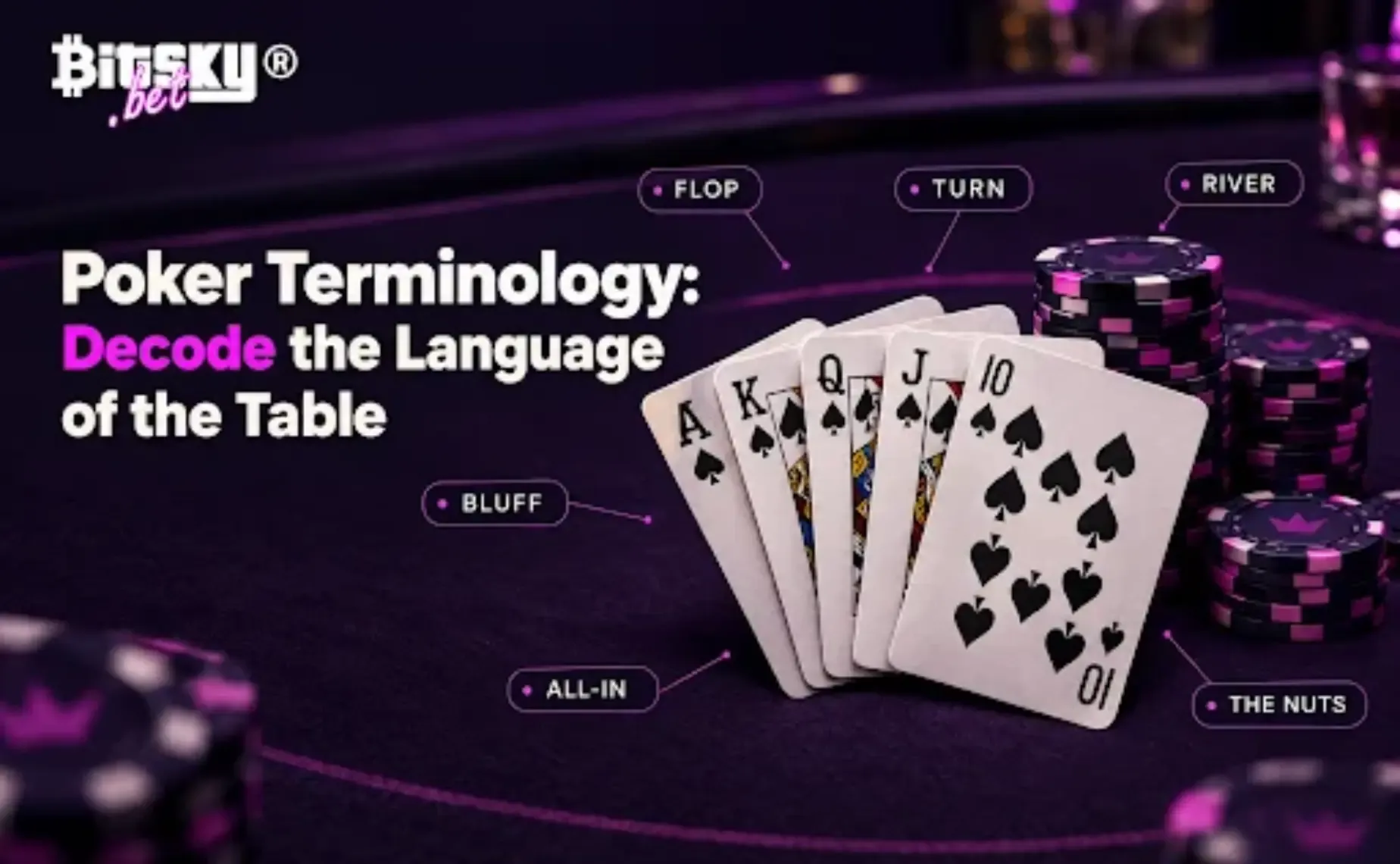
Ever feel completely lost listening to the chatter at a poker table? You’ll hear someone mutter about being "on the button with the nuts," and if you're new to the game, you'll probably just nod along without a clue. That’s the thing about poker. The language moves fast. It’s a wild mix of math, position jargon, and decades of cardroom slang. Learning these poker game terms isn't just about sounding cool; it’s about survival.
What Are Poker Game Terms, and Why Do They Matter
Listen closely to what people say during the game. The dealer announces that the action is on you. Your opponent says, “All in!” Two simple words, and players know that the tension has just hit its peak and whose turn it is to act next. This is the core of poker jargon: short labels that help players grasp the situation at the table. Some terms come from the official rules, such as flop or showdown.
Trying to understand a hand history or strategy guide can be time-consuming if you don’t know the terminology beforehand. Your opponents will talk about making their set, but you won’t know what that means for the hand. The dealer will announce the stake size while you are still working out your next move.
Basic Poker Game Terms Every Player Hears First
Cards and positions come first, because they form the basis of the game and appear in every type of poker.
Cards and Board Terms
Texas Hold’em is the most popular poker variant, so the terms below come from it. They name the cards dealt to players and the ones on the board.
- Hole cards: the two private cards dealt face down to each player
- Community cards: the five shared cards on the board
- Flop: the first three of the five community cards
- Turn: the fourth community card
- River: the fifth and final card
- Board: every community card visible at a given moment
- Showdown: the reveal of hands when more than one player remains after the last round
Seat Terms
Position is crucial in poker, so every seat has its own name. The dealer button moves one seat to the left after each hand, and the terms below name each seat by its distance from it and its turn to act. Blinds and antes put chips on the table before the action starts.
- Small blind: the first forced stake, posted by the player to the left of the dealer button
- Big blind: the second, larger forced stake, posted by the next player to the left
- Under the gun: the first player to act before the flop, seated left of the big blind
- Hijack: the seat two places to the right of the dealer button
- Cutoff: the seat directly right of the dealer button, acting just before it
- Ante: a small forced stake from all players (some variations use it instead of blinds)
Action Terms: What Players Do During a Poker Hand
Finally, in every hand, players perform actions and declare their stakes using poker terminology.
Basic Actions
A hand is made of staking rounds, and players take turns staking. Depending on the platform, either real poker chips need to be pushed on the table, or a list of options needs to be chosen.
- Open: To be the first one to stake in a round.
- Check: To refrain from staking, usually when there are no previous stakes.
- Call: To match a stake.
- Raise: To make a bigger stake.
- Re-raise: To raise again after another player has done that.
- Fold: To quit the hand and give up the pot.
- All-in: To stake all one’s chips
Pressure and Deception Terms
Many poker players try to impress their opponents through actions and expressions. One such action is bluffing, a strong stake with a weak hand, hoping to induce others to fold. It is a semi-bluff when a player has a mediocre hand but expects to improve on the next card. Slow playing is the opposite of bluffing: when a player has the strongest hand, they pretend to have a weaker one to entice others to stake.
A similar term is "limping," when a player matches a stake instead of raising. For example, check-raise, when a player says “check” and then raises when it is their turn. This is a trap, and they call it a ‘check-raise’ if it is successful. A value play is when a player stakes with a strong hand on the expectation that their hand will hold up against an opponent. Bluffing is also a big part of what sets poker apart from blackjack, where you’re only playing against the dealer. If you’ve played both, our blackjack vs poker breakdown covers the other differences.
Hand Strength Terms and Ranking Language
The poker game terms vary depending on how close you are to winning the pot. A made hand is a hand where you have formed a combination, such as a pair, a straight, or a flush. In contrast, a draw is an incomplete hand requiring one or two cards for a winning combination.
Then, there are the nuts: the absolute best possible hand on the board at that exact moment, which cannot be beaten. But what happens if the hands are perfectly equal? That’s where tie-breaker terms like kickers and chopped pots come into play.
Ties in Poker
- Kicker: the next highest card that determines the winner if two players have the same combination
- Set: a three-of-a-kind made from a pair in the hole cards and one on the board
- Trips: a three-of-a-kind made from one hole card and a pair on the board (lower than a set)
The Standard Poker Hand Rankings (Strongest to Weakest)
- Royal flush: Ace, King, Queen, Jack, and 10 of the same suit
- Straight flush: five consecutive cards of the same suit
- Four of a kind: four cards of one rank
- Full house: three of a kind plus a pair
- Flush: five cards of the same suit, not in sequence
- Straight: five consecutive cards of mixed suits
- Three of a kind: three cards of one rank
- Two pair: two different pairs
- One pair: two cards of one rank
- High card: no combination, so the highest card plays
Math and Strategy Terms
Many players perform calculations and use specific terms. Outs are cards that can improve the hand; players use this word to count them and determine their chances. Pot odds are the ratio of the size of the pot to the required stake and indicate the value of a call. Equity refers to one’s chances of winning the pot.
Long-Term Strategy Terms
The strategy in poker is long-term, and there are special terms that relate to a player’s range of hands, their actions, and value. Here are some of the most common terms that often appear in blog posts or forums.
- Range: All the hands that a player can have in a game
- Implied odds: The extra stakes that a player can expect to win if their hand improves
- Fold equity: The possibility that an opponent will fold
- Expected value (EV): The average outcome value of a given action
- Variance: how much results swing around the expected value
- Showdown value: The value of a hand at the end of the round
Player Type and Table Slang
To win at poker, you have to read the people across from you. The poker community categorizes players using two main spectrums of behavior:
- Tight vs. Loose: A tight player is highly selective, only playing premium starting hands. A loose player loves action and will play a wide, unpredictable variety of cards
- Aggressive vs. Passive: An aggressive player dictates the action by staking and raising frequently to force errors. A passive player prefers to check and call, letting others dictate the pace
The Poker Aquarium
Cardroom slang frequently borrows from the ocean to describe a player's skill level:
• Shark: A highly skilled, predatory expert who preys on weaker opponents
• Fish: A weak, inexperienced player who frequently gives away their chips
• Whale: A wealthy, terrible player playing at massive stakes; the ultimate target for a shark
Players use terms like tilt to denote a state of mind when they cannot play correctly. A bad beat is an unpleasant surprise when an opponent beats a strong hand with a weaker one. Tells are clues about a player’s hand, and a cooler is the opposite situation when one has a strong hand but cannot beat the other.
How to Practice Poker Game Terms on Bitsky
Understanding the glossary is only the beginning, and one can learn terms through play. Here, poker players can use Gold Coins to play for fun and Sweeps Coins for sweepstakes entries with grand prizes. Players can earn Daily Rewards to collect more Sweeps Coins and invest them in poker-style games to improve their skills.
Anyone ready to start on Bitsky today can use this offer: Claim 131% more on your first purchase. Visitors who are not ready to sign up can still use this glossary as a reference for any poker game they watch or play.
Conclusion
Poker game terms are not merely a list of strange words used in card rooms. It is just a vocabulary that players use to determine the strength of their hands and evaluate the characters of other players. Once the poker side feels comfortable, the sweepstakes casino glossary covers the rest of the jargon you’ll run into on the site. Don’t worry if you can’t remember all these terms right away. No one expects you to become a walking poker dictionary overnight. In fact, choose some particular category of terms, keep it in mind for your next game, and pay attention to these words.
Ready to put your new vocabulary to the test? Bitsky, a US-based sweepstakes casino, offers the perfect, relaxed environment to familiarize yourself with these essential game terms once you have learned the basics. When you’re ready to explore, create a Bitsky account using code BONUS4U to get 20% off, plus 0.20 SC and 20,000 GC.
FAQs
1. Can I earn free coins on Bitsky without buying anything?
Yes. Email and SMS opt-ins are two ways to collect free Sweeps Coins on Bitsky, and the promo code feature adds another. Promotions change from time to time, so check your account for what is live now.
2. Can Sweeps Coins be redeemed for prizes?
Yes, eligible Sweeps Coins can be redeemed for prizes, but the details sit in Bitsky’s redemption terms. Read them before you play so the requirements and limits that apply to your account come as no surprise.
3. Does Bitsky offer poker-style games to practice these terms?
The game library changes over time, so the poker-style lineup can shift. Check the lobby to see what is listed today. Whatever card game you open, this guide works as a handy reference for the wording.
4. What is the rake in poker?
Rake is the fee a poker room keeps for running the game. In cash games, it comes out of each pot, while tournaments fold it into the entry fee. The exact amount depends on the room.
5. What does "burn card" mean in poker game terms?
A burn card is the top card of the deck, which the dealer sets aside face down before the flop, turn, and river. It protects the game if someone glimpsed a marked card on top.
Authored and Validated By: A Sweepstakes Gaming Expert